
Every dose recorded.
Every animal known.
A dose without an identity cannot be followed up. PraniID records the rabies and other doses against a specific animal, so next year's booster belongs to a dog you can name — not to a line in a register.
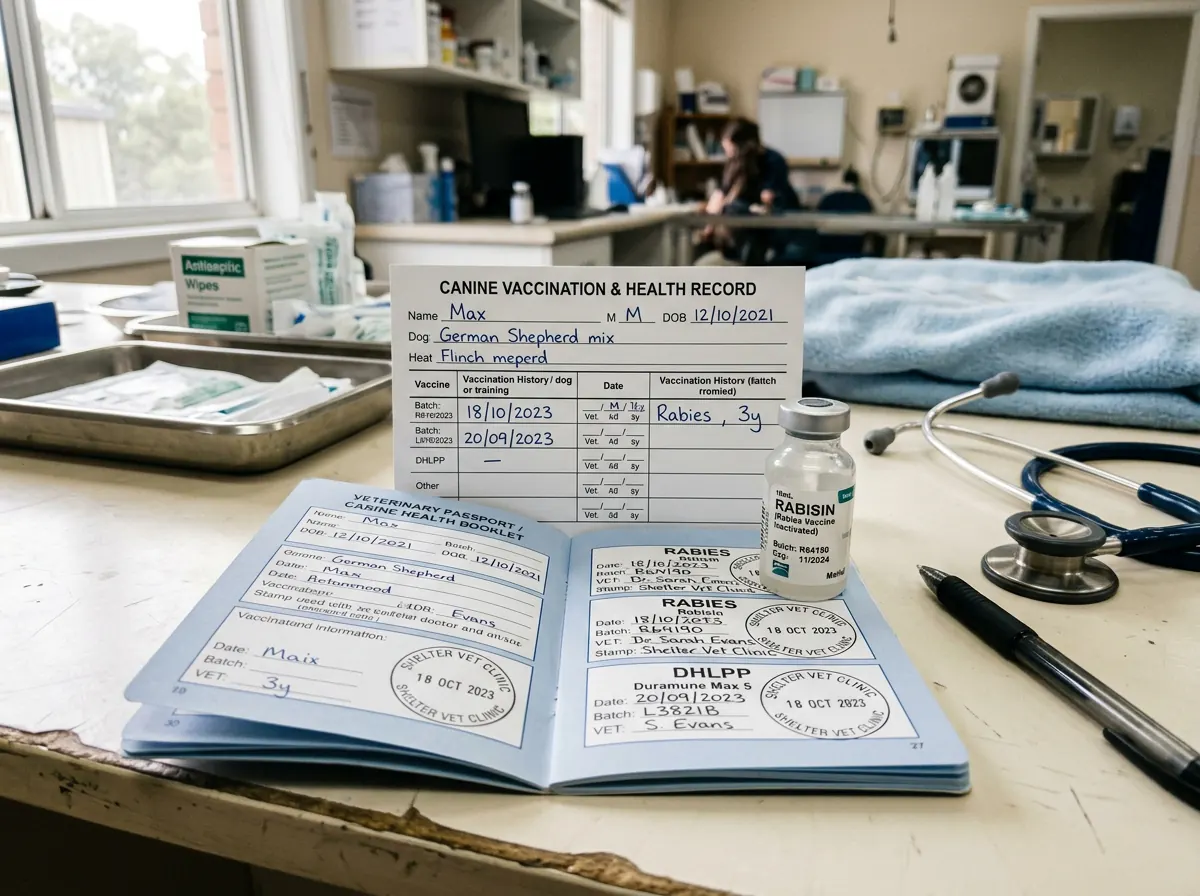
Counting doses is not the same as vaccinating animals.
A drive that reports "120 dogs vaccinated" is useful. What it cannot tell you is which of those dogs is due again next year, and whether the animal with the highest street-visibility was among the twenty you missed.
The same animal is not counted twice
A dog vaccinated in March does not reappear as a new animal in April. The second dose is a second record on the same animal.
The booster has a date attached
Each dose stores the next due date, so the animal appears in the due list rather than in someone's recollection.
The animal can be marked in the field
A QR tag on a vaccinated animal lets the same feeder recognise it again rather than relying on a list of ear notches.
What a single animal's record looks like.
A drive register lists animals. This is the other half: what the record for one of them holds, and what the next due date is derived from.
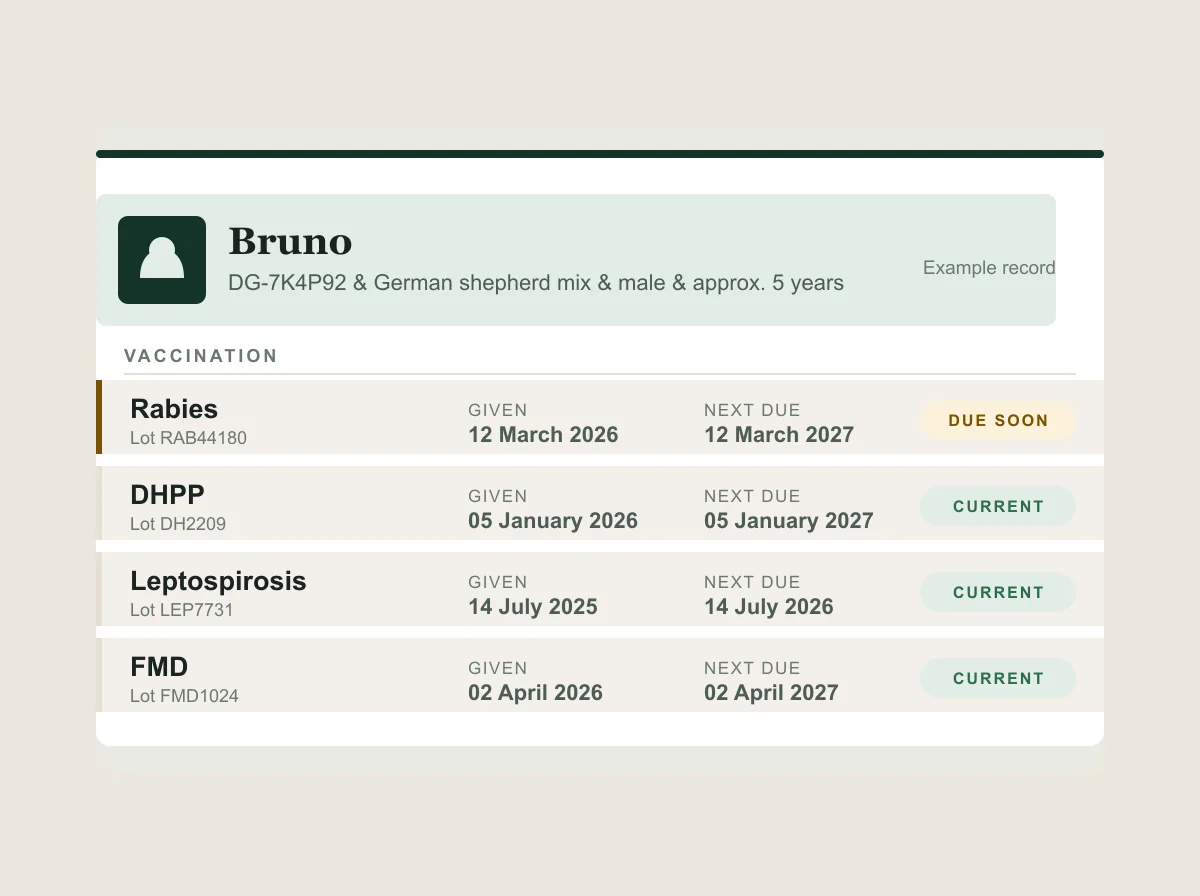
Every dose hangs off an identity.
Four vaccines on one animal, each with its batch number and its own booster date. This is an illustration of the record format rather than a photograph of the console, and the animal and its dates are an example. The fields are the ones the product stores.
Vaccination day, worked down a list.
The register is the part that makes a drive repeatable. It lists every animal you hold that has not been adopted, ordered by how urgently it needs the rabies dose, with the last dose and the booster date beside each one.
| ID | Name | Rabies | Last dose | Booster due | Register |
|---|---|---|---|---|---|
| DG-2F81C4 | — | Never | — | — | Due |
| DG-9X2L07 | Sheru | Overdue | 14 March 2025 | 14 March 2026 | Overdue |
| DG-7K4P92 | Bruno | Current | 12 March 2026 | 12 March 2027 | Done |
| DG-4B07DE | Kali | Current | 2 February 2026 | 2 February 2027 | Done |
- Never vaccinated, sorted first
- Overdue next
- Current last
- Export the drive as CSV
Enough detail to be useful at the clinic.
-
Identify
Scan the existing tag, or register a new animal with a photograph and its shelter reference or microchip ID. Either way the dose attaches to a specific animal.
-
Record the dose
Vaccine name, date given, next due date, clinic and batch number. Rabies, DHPP, FVRCP and FeLV are all stored separately per animal.
-
Work the list
Each animal is marked done or still due as the day goes, so the register at the end is an accurate count rather than an estimate.
Doses are sorted into current, due soon and overdue whenever the console is open, and a due list covers every animal you hold. There is no scheduled reminder email yet, because nothing in the product sends one. If a caretaker who never opens a console still needs to be reached, that is a gap worth telling us about.
Same record, other work.
Sterilisation status
ABC status is held against the animal and can appear as a badge, which matters to residents deciding whether to feed a dog.
Treatment and injury
Injuries and treatments are logged on the record with a status that shows the animal is under care rather than available.
Found reports
A finder who scans a tag can send a sighting with their location. It reaches your organisation and nobody else.
Adoption
When an animal is rehomed, the status and the handover are recorded against it, and its public profile closes once it is adopted.
From programme coordinators
Does it record ARV separately from other vaccines?
Yes. Every dose is stored individually with its own name, date given, next due date, clinic and batch number, so rabies, DHPP, FVRCP, FeLV or whatever your clinic uses are tracked separately rather than as one vaccination field.
What is the drive register?
A working list for a vaccination day. It lists every animal you hold that has not been adopted, ordered by rabies urgency — never vaccinated first, then overdue, then current — with the last dose and the booster due date against each one, and a done or still-due marker. You work down the list rather than off a memory.
What happens if one animal in a batch has a mistake?
Per-animal failures are reported rather than cancelling the whole batch. A typo on animal twelve does not leave animals thirteen to forty unvaccinated.
Do we need to know the animal's name?
A name or recognisable shelter reference is required when registering an animal. If its name is unknown, use an intake reference and update it later.