Your dog is found by whoever picks it up.
Not by a search radius, and not by a phone number written on a tag that went out of date two years ago. By the person on the street who picks your dog up, opens their camera app, and sees who is looking for it.
- No app for the finder
- No account needed
- Free reprints, forever
- No paid tier
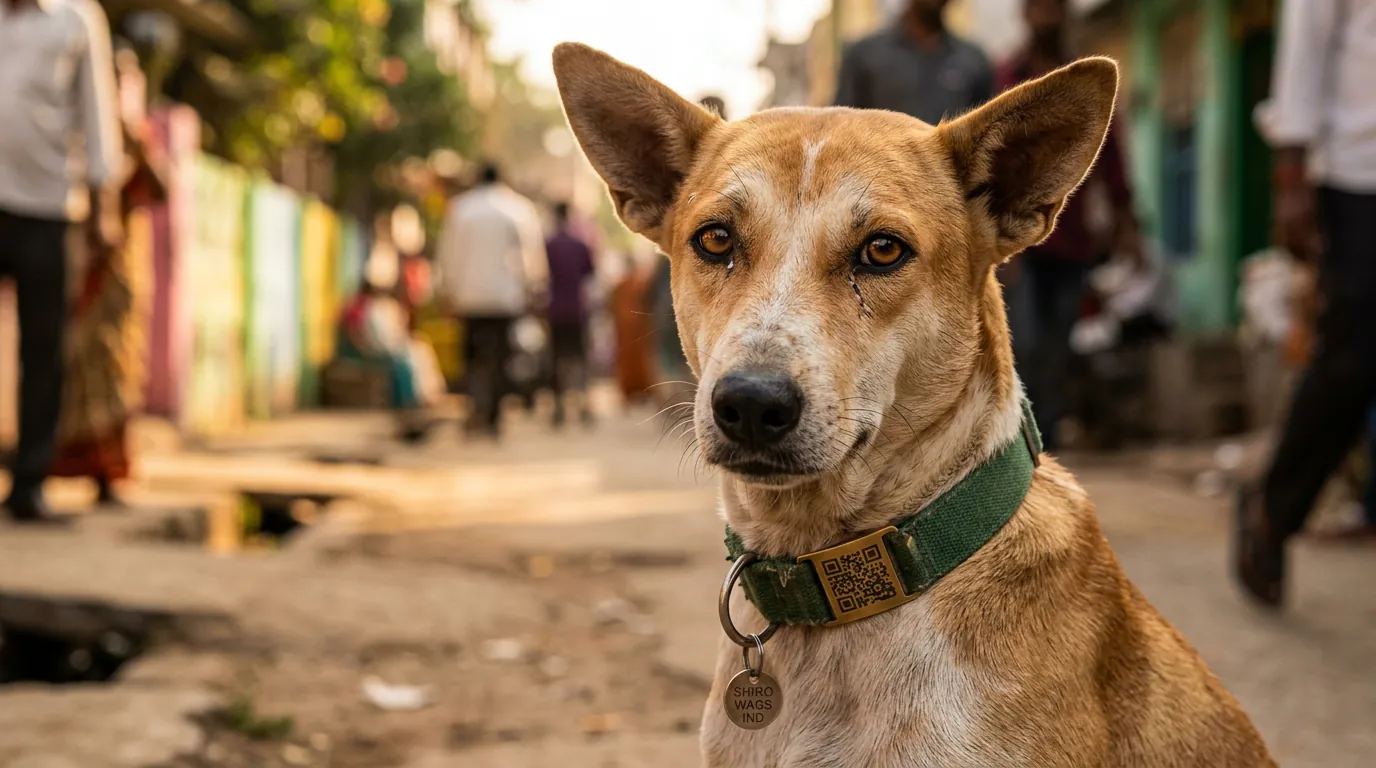
Three things go wrong with the tag in the drawer.
This is not an argument for a QR code. It is an argument for the profile behind it.
It is out of date
You change number, you move city, the phone is reassigned. The tag on the collar still says the old one, and the person holding your dog calls a stranger.
It says nothing useful
A number tells a finder nothing. It does not tell them whether your dog is neutered, vaccinated, or safe to approach — the three things someone hesitating over a lost dog actually wants.
It cannot be reported to
A static tag cannot receive anything. When someone does see your dog, there is no way for that sighting to reach you except by a phone call they may never make.
The page between the collar and the phone call.
One page load, no download, no login. Everything on it is there to make the next action obvious.
- Photograph, name, breed and age
- Care team phone number, shown while the animal is lost
- Summary badges such as vaccinated or microchipped
- How long the animal has been missing
- A sighting form that sends the finder's location back
What is never on that page
- Your address or the care team's address
- Full medical history and batch numbers
- Internal notes, staff accounts, audit log
- Anybody else's sighting reports
Who can create a profile today.
We would rather lose a sign-up than send you somewhere that cannot help.
| If your dog is cared for by | Who holds the record | What you can do today |
|---|---|---|
| A shelter, NGO or gaushala | They do, in the console. | Ask them to publish your dog's profile and attach the tag. This is the supported route. |
| A vet, with a microchip | The vet's practice. | A vet or shelter with a reader can identify the animal from the chip number. |
| You, at home | Nobody — there is no individual signup yet. | If your dog is lost, the finder's half still works as soon as any organisation registers a profile and the tag points at it. |
You are the audience this product is built for today. The console is reached by application, there is no paid tier, and the registry exports to CSV whenever you want it.
The same record carries the health history.
Vaccination history
Doses recorded with date, vaccine and batch number, and the next due date shown. Overdue and upcoming doses are flagged inside the console — there is no reminder email, because nothing sends mail.
Medical timeline
Treatments and chronic conditions in one chronological record, so a vet treating your animal is not starting from scratch.
Reprint without limit
The QR encodes the permanent profile link rather than the tag. A faded tag or a lost collar means printing another one, not registering a new animal.
Sighting reports
When someone reports your animal with a location, it reaches the guardian and the organisation holding it — and nobody else.
From people with a dog on a lead
Can I create my dog's profile myself today?
Not yet, and we would rather say so than take you to a form that will not help you. Individual accounts are not open; the console is reached by an application from a shelter, NGO or gaushala. What works today is the finder's half: the tag opens a public profile in any browser with no account at all.
So who holds my dog's record?
If a shelter, NGO or gaushala cares for your animal, they hold it, and the tag on your dog opens the profile they publish. If you are registered with a vet, the microchip is the identifier — a vet or shelter with a reader can look it up.
Does the finder need to install anything?
No. The QR code opens in whatever app their phone uses for the camera. There is no download, no account and no login wall between the person standing in the street with your dog and the page that tells them who to call.
What can my dog's public profile show?
Photograph, name, breed, age, summary badges such as vaccinated, and a way to make contact — which of those appear is the care team's decision, not the finder's. Full medical history, internal notes and the audit log are never public.
What happens if the tag comes off?
Print another. The QR encodes the animal's permanent profile link rather than the tag itself, so a reprint resolves to the same profile. Printing is free and there is no limit on how many you print.
Is there a paid tier?
No. There is no checkout anywhere in the product and no payment is collected at any point. The only gate is an application that an administrator reviews.
Running a shelter, NGO or gaushala?
That is who PraniID is built for today. One record per animal, vaccination history, QR identification and the adoption workflow, with no paid tier.